MSc thesis project proposal
Forensic Cartridge Case Analysis
Project outside the university
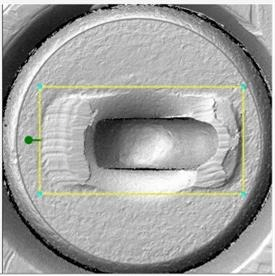
National Forensics Institute (NFI)When a firearm is discharged, it leaves microscopic markings on the cartridge case, which can provide valuable forensic evidence for linking a firearm to a shooting event. At the Netherlands Forensic Institute (NFI), high-resolution 3D measurements of cartridge cases are collected and analyzed to support forensic investigations. By comparing the markings on a cartridge case recovered from a crime scene with those on cartridge cases obtained from test firings of a suspected firearm, forensic experts assess the strength of the evidence supporting the hypothesis that the cases were fired from the same firearm.
Traditionally, these comparisons have relied on expert examination and rule-based computational methods. The NFI has co-developed a rule-based system to support the automated comparison of cartridge cases. However, recent advances in artificial intelligence, particularly deep learning, offer new opportunities to improve the accuracy, robustness, scalability, and efficiency of forensic ballistic analysis.
This project will explore the potential of modern AI techniques for automated cartridge case comparison and forensic evidence evaluation. In particular, deep learning architectures, including convolutional neural networks and transformer-based models, could be investigated to extract discriminative features from 3D surface measurements and identify complex patterns that are difficult to characterize using handcrafted features or conventional rule-based approaches.
Furthermore, vision-language models (VLMs) may offer opportunities to combine visual or geometric information with contextual information and domain-specific forensic knowledge. Such models could potentially support more interpretable comparisons, generate structured explanations of observed similarities and differences, and assist forensic experts in assessing the evidence.
Another promising direction is agentic AI, where AI agents coordinate different stages of the forensic analysis workflow, such as data preprocessing, feature extraction, similarity assessment, uncertainty quantification, and report generation. Such systems could integrate multiple specialized models and analytical tools while keeping forensic experts involved in critical decisions.
The overarching objective is to investigate how these emerging AI technologies can complement existing forensic methods and contribute to more reliable, transparent, and efficient firearm identification. Particular attention will be paid to model validation, generalization across firearms and ammunition types, uncertainty quantification, explainability, and the forensic interpretation of algorithmic results. Ultimately, the goal is not merely to classify cartridge cases as matching or non-matching, but to develop methods that can support scientifically defensible, calibrated assessments of evidential strength, suitable for forensic casework.
Assignment
The objective of this MSc thesis is to investigate and develop AI-based methods for automated cartridge case comparison, leveraging recent developments in deep learning, transformer architectures, vision-language models (VLMs), and agentic AI.
The student will:
Investigate state-of-the-art AI methods for analyzing and comparing 3D surface measurements.
Develop and implement deep learning models, potentially including transformer-based architectures, for feature extraction and similarity assessment.
Explore the potential of VLMs and agentic AI to support automated analysis, interpretation, and forensic workflows.
Evaluate the proposed methods against existing approaches, focusing on accuracy, robustness, generalization, and interpretability.
Investigate how algorithmic outputs can support reliable quantification of forensic evidential strength.
The project will be conducted in collaboration with the NFI and offers an opportunity to apply cutting-edge AI techniques to a challenging real-world forensic application. The precise research focus will be determined based on the student's interests, available data, and initial experimental findings.
Requirements
MSc student in Electrical Engineering, Computer Science, Artificial Intelligence, or a related field.
Solid background in machine learning, deep learning, and signal processing.
Good programming skills in Python, preferably with experience in PyTorch.
Familiarity with computer vision, transformer architectures, or 3D data processing is an advantage.
Interest in exploring emerging AI technologies, including vision-language models (VLMs) and agentic AI.
Contact
dr.ir. Justin Dauwels
Signal Processing Systems Group
Department of Microelectronics
Last modified: 2026-10-10